Prototyping & Rapid Development
Create initial models of a product or assembly for testing and validation before actual manufacturing. Accelerate your time-to-market with precision engineering.
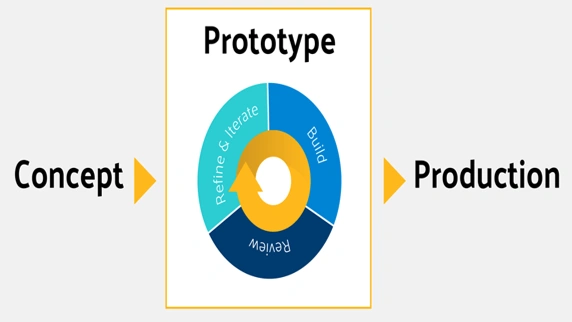
Bringing Manufacturers and Designers on Equal Footing
"Rapid Prototyping creates a way to understand the expectations of both parties. If there are discrepancies in parameters, necessary changes can be made before actual production."
It involves various iterations for any desired changes in the part design before actual manufacturing, ensuring that conceptual designs are fully validated and ready for the real world.
Fast Iterations
Quickly refine designs based on real findings.
Risk Mitigation
Solve problems before expensive production tools.
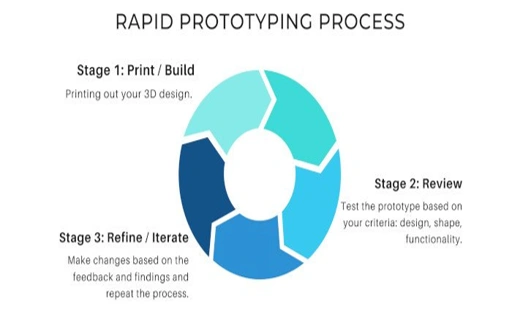
The Rapid Prototyping Process
Print / Build
Printing out your 3D design using the most suitable rapid development technology for your specific needs.
Review
Test the prototype based on your specific criteria including design accuracy, shape conformity, and mechanical functionality.
Refine / Iterate
Make data-driven changes based on the feedback and findings, then repeat the process until the design is perfected.
Prototyping Modalities
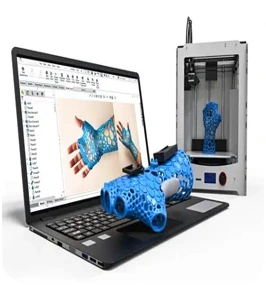
3D Prototyping
It tells about the functionality and strength of the products' moving features. It can go through various test runs and simulations to proof the credibility and actual working of the product.
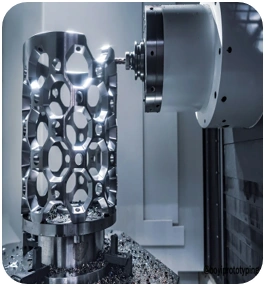
CNC Machining
In some cases where the tolerances play a crucial role in the functionality, in such cases this method can be used with up to 0.001mm limits.
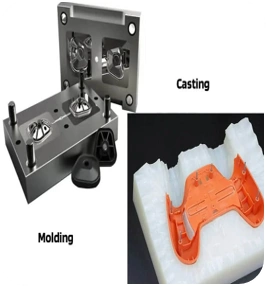
Vacuum Casting
Molds use silicone polymer whereas product is made from polyurethane. Ideal for testing and verifying before actual mold manufacturing.
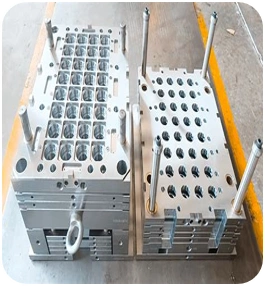
Rapid Injection Molding
Aluminum molds for harsh trials like crash testing, stress concentration, and life cycle analysis before mass production.
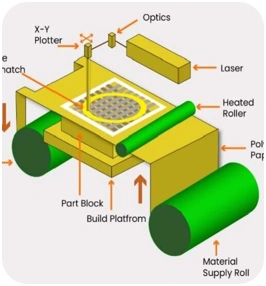
Sheet Lamination
Layers of plastic are joined and trimmed to analyze body structure and panels. Most cost-effective for large configurations.
3D Prototyping Techniques
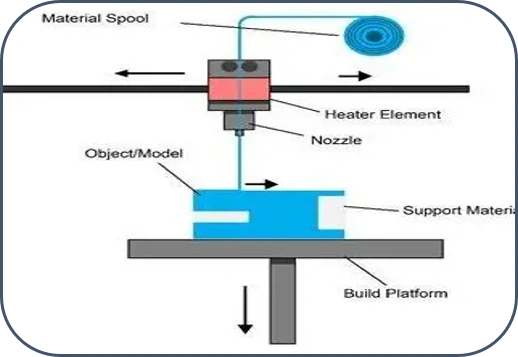
Fused Deposition Modeling (FDM)
Nozzle moves in the direction of given 3D model depositing molten material from the spool on the build platform.
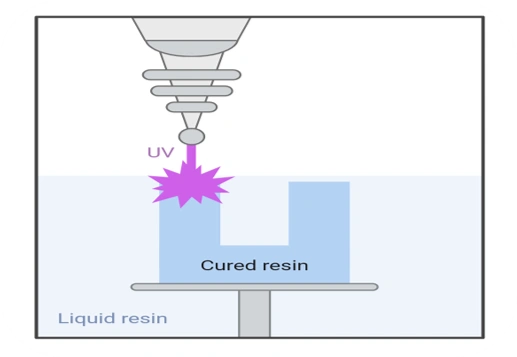
Stereolithography (SLA)
Hardening of curable resin (layer-by-layer) with the help of UV light source.
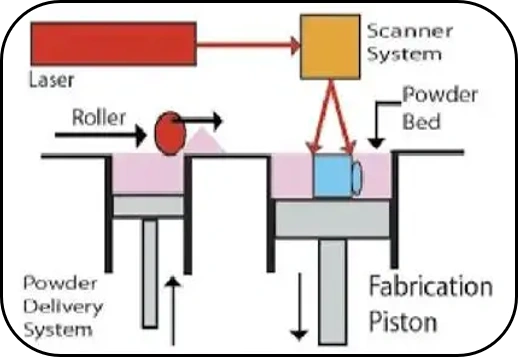
Selective Laser Sintering (SLS)
Laser source melts powdered material with the help of delivery system piston and roller. Once a layer is finished, fabrication piston moves down.
Prototype Advantages
Cost Saving
Any misunderstanding in the part design or function can be rectified before product manufacturing.
Ergonomics Validation
Parts crucial in an assembly can be verified with their respective fits and function before mass production.
Functional Testing
Prototypes can be verified on the basis of heat, vibration, strength, and stress concentration tests.
Research & Innovation
Verify changes in existing parts on the prototype before final product implementation.
Frequently Asked Questions
Got questions about our services? Find the answers here.
Ready to validate your next big idea?
Our engineering team is ready to help you iterate faster and more efficiently. Let's build your concept today.
Get Expert Consultation